How do I become an RE teacher?
Karen Steele offers seven reasons why becoming an RE teacher is a great career choice.

TEACH RE? HERE ARE SEVEN REASONS WHY YOU SHOULD
1. RE is one of the most intellectually diverse subjects
RE sits at the intersection of philosophy, ethics, sociology, history, politics, culture, psychology and anthropology. All disciplines are welcome. Humanities graduates bring analytical and communication skills; science graduates contribute logical reasoning and evidence-based thinking; social science graduates understand culture, society, and human behaviour.
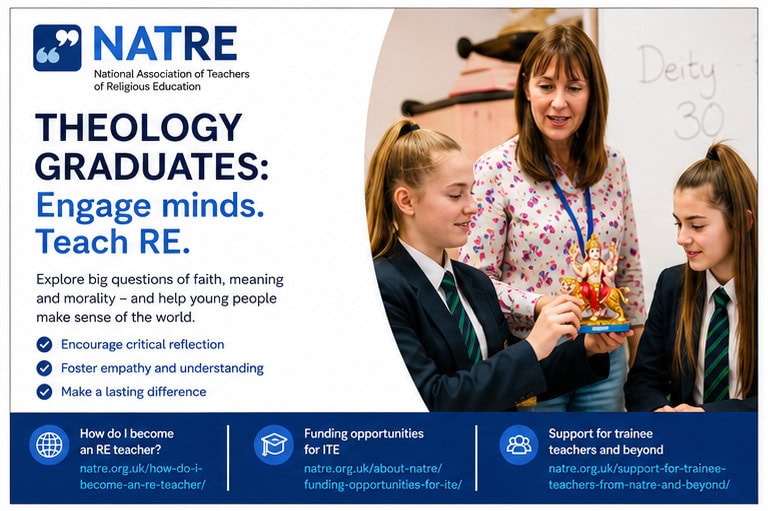
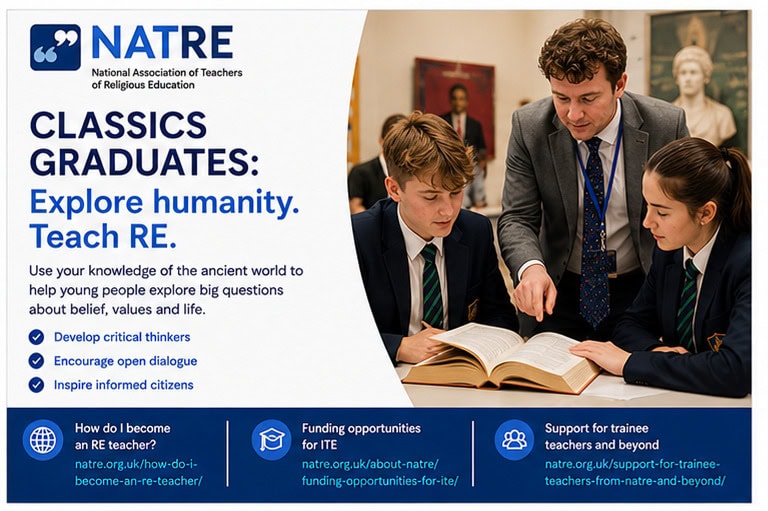
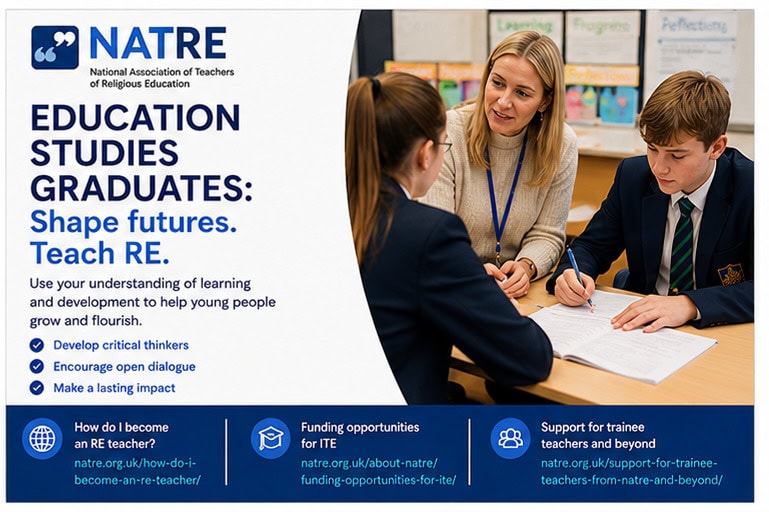
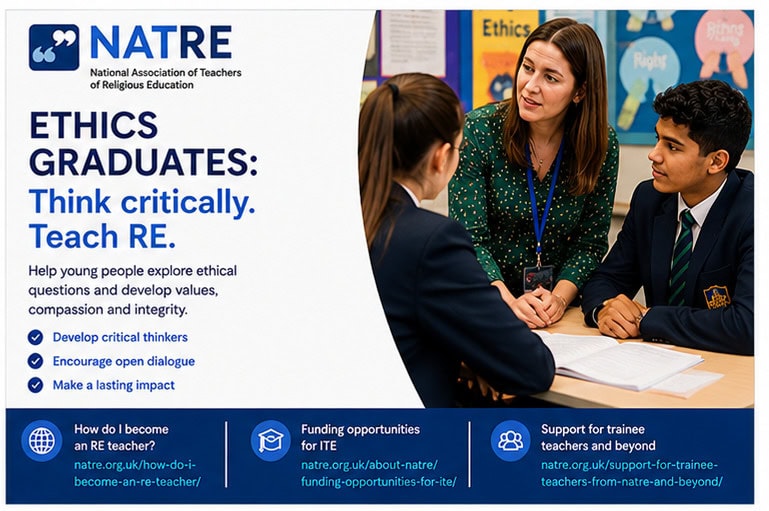
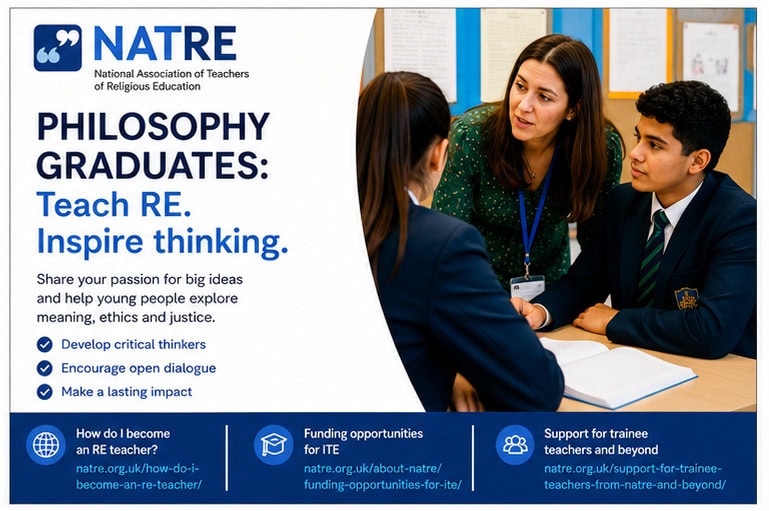
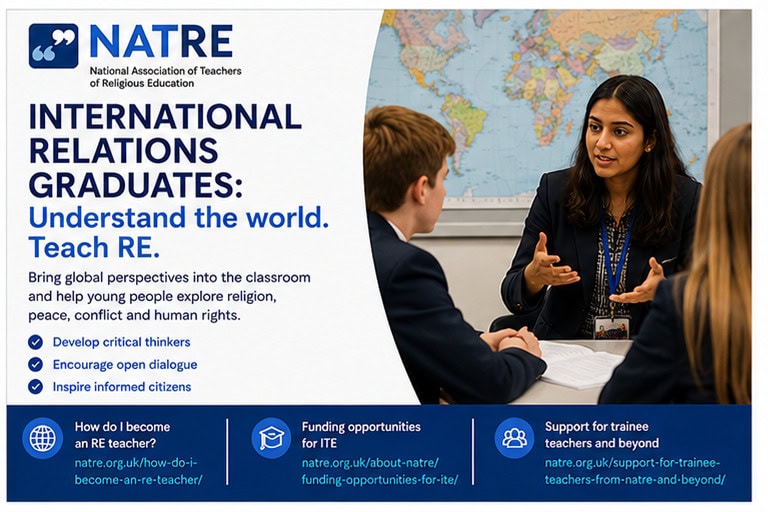
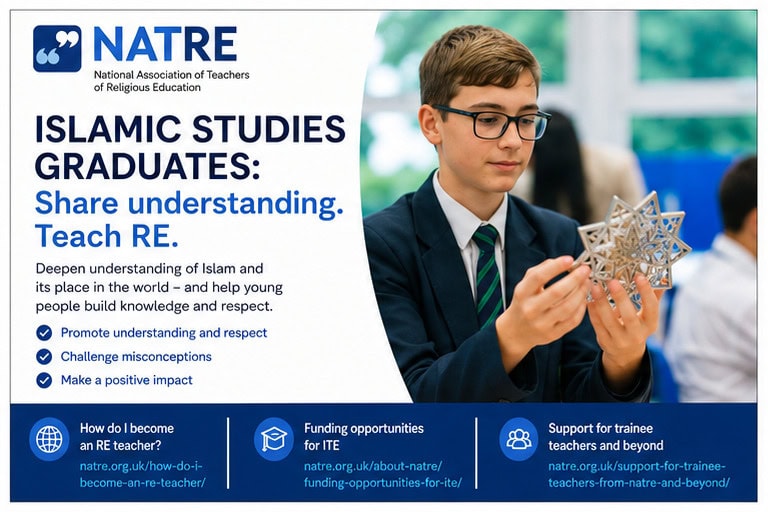
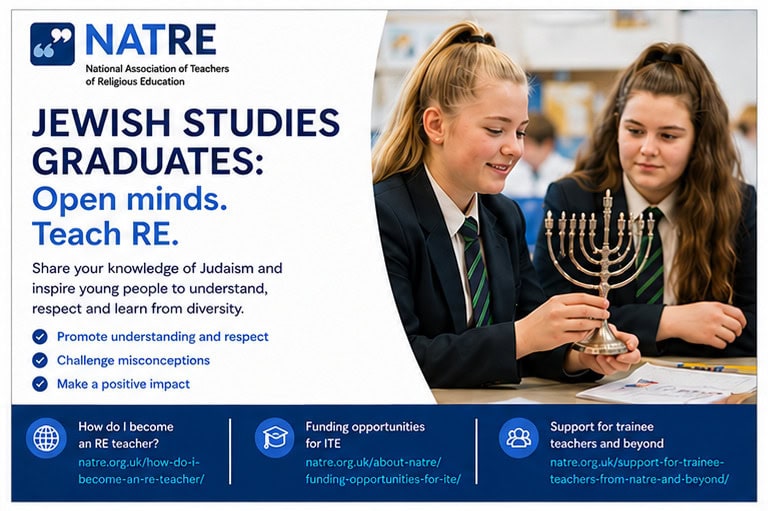
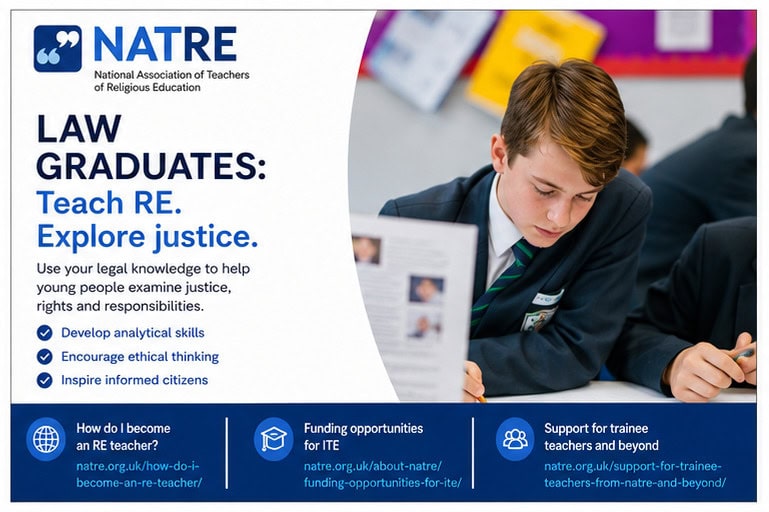
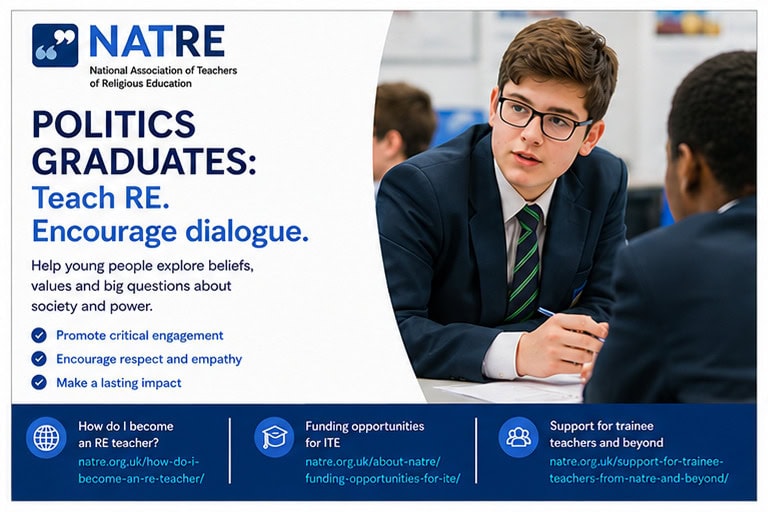
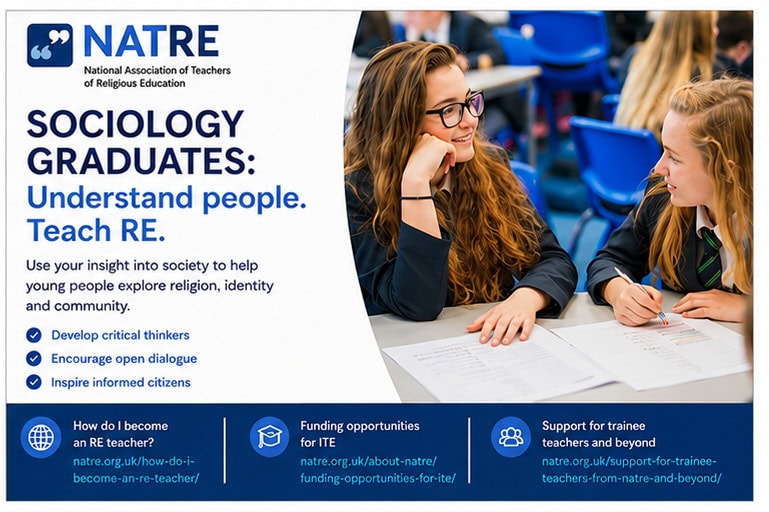
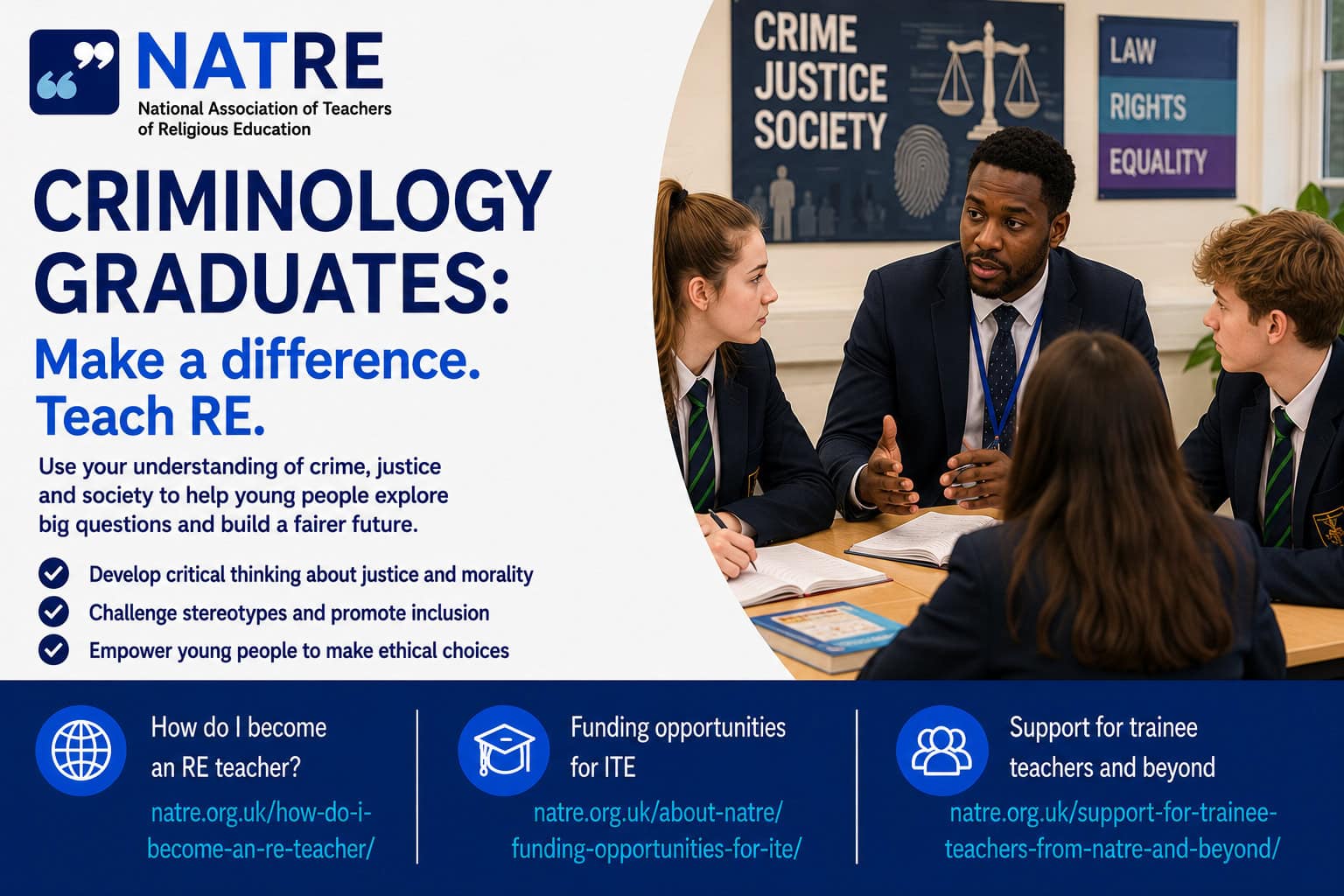
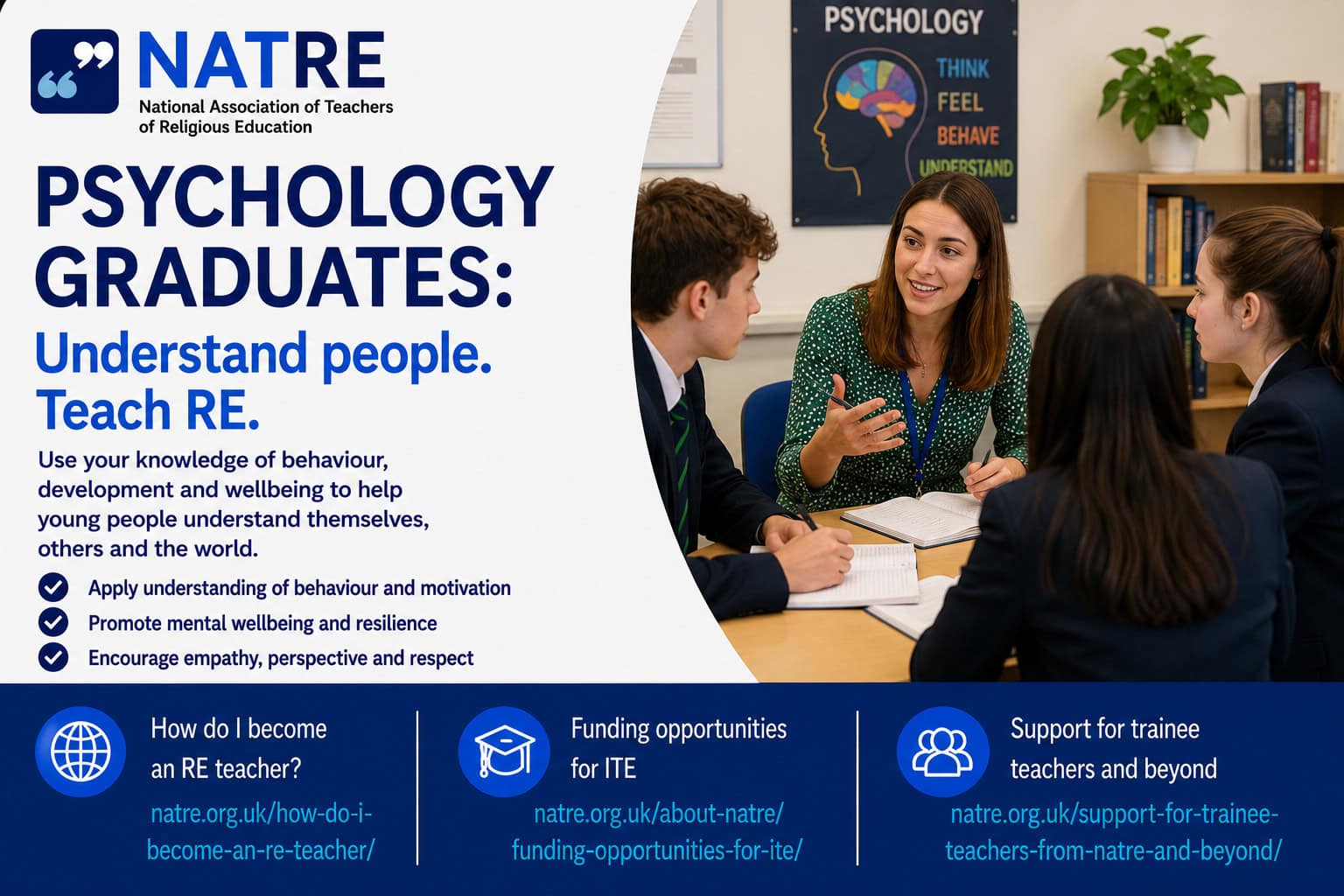
There are many degrees that prepare you well for the teaching of RE. Graduates from Theology and Religious Studies make up about a third of graduates but people with degrees in other subjects are often accepted e.g. classics, education studies, ethics, history, philosophy, international relations, Islamic studies, Jewish Studies, Law, politics, sociology, criminology and psychology. Click on the links to find out more.
2. High demand for RE teachers
RE is a shortage subject. This means strong employability and good career prospects. With a shortage of specialists, committed RE teachers often progress quickly to head of department, whole-school teaching and learning roles, pastoral leadership and Trust-level or advisory positions.
Click here to listen to this podcast to hear from RE teachers at different stages of their careers!
3. Funding is available
Several charitable organisations offer financial support to trainee RE teachers. Discover more here!
4. RE promotes critical thinking, not religious affiliation and supports social cohesion
You don’t need to be religious to teach RE. Graduates of any background are welcome.
RE helps young people think critically about real-world issues such as the climate crisis and the challenges presented by AI. As an RE teacher, you can help prepare young people for the ever-changing world they will live in.
As an RE teacher you’ll encourage debate, empathy, dialogue and respectful disagreement. Teaching it means helping young people understand diversity and engage thoughtfully in a plural society. RE is important for spiritual, moral, social and cultural development and in challenging extremism. As an RE teacher, you can help build a safer, more inclusive society.
5. A strong professional community
RE has many professional bodies offering mentoring, free resources, conferences and career development. Few subjects boast such a supportive and nurturing network. Click here for more information about support available to trainee teachers.
6. Daily variety and creativity
RE lessons include discussion, philosophical enquiry, analysing texts and interrogating data – it’s one of the most diverse and challenging subjects. In a single day you might teach about Hindu Dharma, religious views on euthanasia, non-religious worldviews, Catholic responses to Marxism and different ways of reading the creation story in Genesis. In RE we draw upon rich religious traditions, great thinkers and academic disciplines. It’s never boring.
7. A role with a sense of purpose
Children and teenagers often find RE personally meaningful because it touches on identity, ethics, and life choices. It’s about the very nature of human existence, making engagement strong and relationships memorable. You help young people navigate complex moral and cultural questions. You foster respect and understanding in future citizens. What could be more rewarding?
Follow this link here to learn about the career journeys of different teachers.
How do I apply?
What qualifications do I need to train as a secondary school RE teacher?
To train to teach in secondary schools in England you’ll need
- GCSEs at grade 4 (C) or above in English and maths
- A bachelor’s degree
For applications to secondary RE courses your degree will need to be in a relevant or related subject. Common degrees held by RE teachers include Theology, Religious Studies and Philosophy. Providers will also consider an application from graduates with degrees in social sciences such as sociology, law, etc. If your degree is from a subject that is not directly related to a study of religion and belief, they may take into account other qualifications (for example, if you have an A level in Religious Studies).
Some providers may also consider applications from people who do not hold the necessary GCSE qualifications, although you will be required to sit an equivalency test to demonstrate your ability.
How do I find a training provider?
To find get advice on training to teach a good starting point is the website – Get Into Teaching.
To find courses you can use the following links
- Teacher training in England
- Teacher training in Scotland
- Teacher training in Wales
- Teacher training in Northern Ireland
What are training providers looking for?
At the application and interview stage providers are not necessarily looking for people who are ready to teach. They are looking for people with the potential to become good RE teachers given a year of training and support. The following pointers are things that providers might be looking for that you could consider when writing your application or preparing for an interview.
- All RE PGCE students have aspects of subject knowledge that they need to develop whilst on their course. It is likely that interviews will be used to assess these gaps to ensure you understand the extent of them and can identify how you intend to address them. Providers will be looking for individuals who show a commitment to improving their subject knowledge and who are motivated to work on this.
- You do not have to have school experience to apply for a teacher training course, but it can help you at an interview if you are able to talk about your experiences of engaging with children and young people, either in a school setting or in another context.
- You may be asked to prepare something for the interview (e.g. a short presentation, or a lesson plan). Through this interviewers are likely to be assessing both the thinking that underpins what you have prepared and how you relate to them, other candidates or, sometimes, pupils whilst you are presenting it.
- You should have a clear rationale for why you think RE is important and why you want to teach it. This may be articulated in your application and discussed at interview.
- If you do not have a degree qualification that is directly related to RE, be prepared to talk about how your academic background, your experiences and your skills and abilities connect with the curriculum and will help you become a good teacher of RE.
- Interviewers will not expect you to have all the answers. They are looking for someone who is honest about their abilities, clear about what they can bring to teaching RE and who is able to reflect honestly on their skills and experiences.
How can I develop my subject knowledge?
There are various online resources that you can use to help you develop your subject knowledge. This blog will help you think about how you might approach this – New to RE? Developing Subject Knowledge – RE:ONLINE. You can also find a list of resources that you can use to support the development of your subject knowledge here – Subject Knowledge Enhancement Resources – RE:ONLINE